Summer in Cyprus can be challenging for both people and wildlife. As temperatures regularly exceed 40°C and heatwaves become more frequent, birds face the difficult task of keeping cool while finding enough food and water to survive.
Fortunately, birds have evolved several remarkable ways to cope with extreme heat. Unlike humans, they cannot sweat, so they rely on a combination of behavioural and physical adaptations to prevent overheating.
Keeping cool in the heat
One of the simplest ways birds avoid overheating is by staying out of the sun during the hottest part of the day. Many species seek shelter in dense vegetation, tree canopies or shaded corners, becoming most active during the cooler hours of the morning and evening.
You may also notice birds sitting with their beaks open during hot weather. This is often a normal cooling behaviour known as panting, which helps them lose heat through evaporation. Some species, such as herons and cormorants, use an even more efficient technique called gular fluttering, rapidly vibrating the muscles in their throat to increase heat loss.
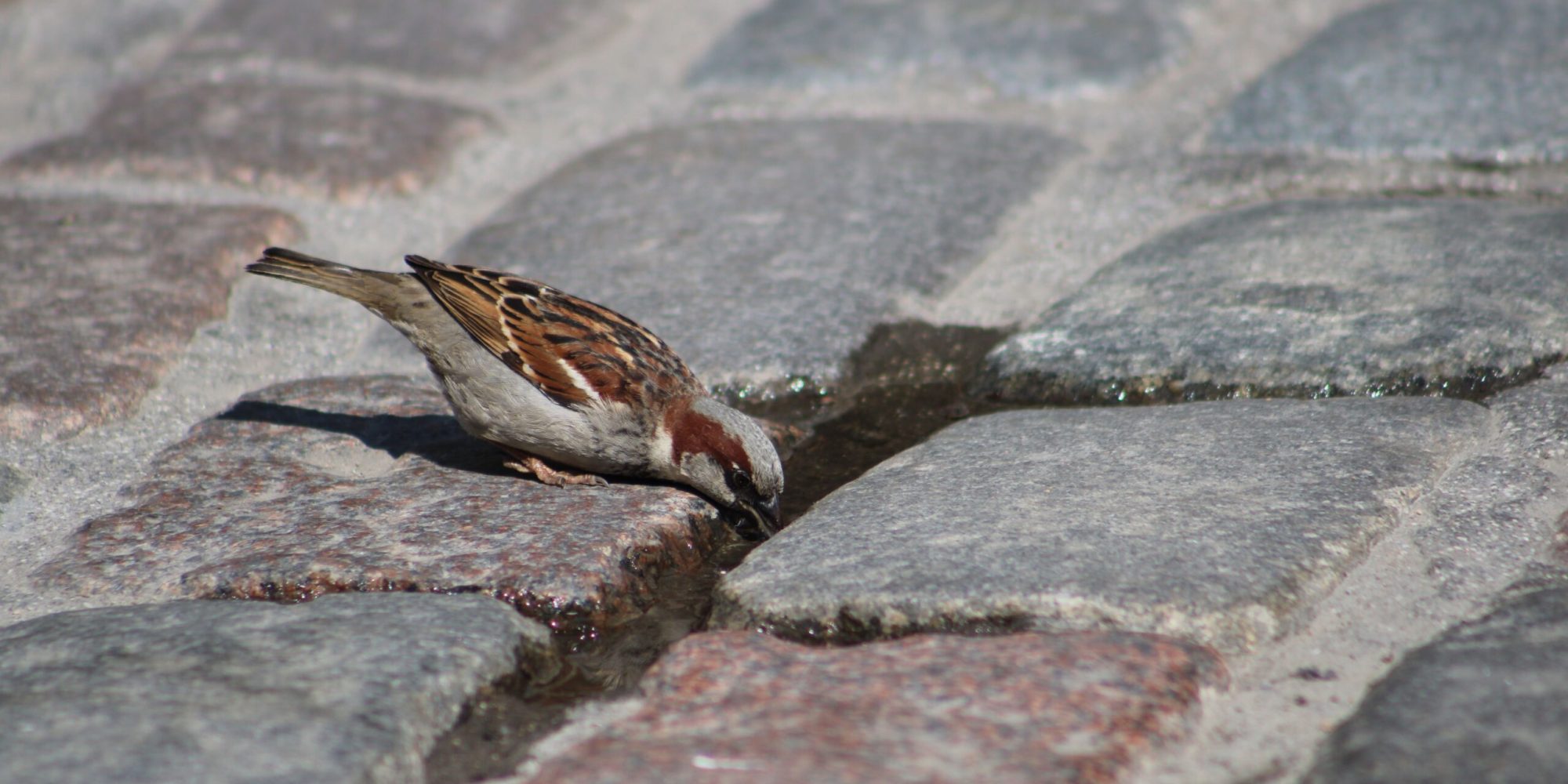
Water becomes especially important during periods of extreme heat. Birds drink more frequently and often bathe to cool themselves down. Wet feathers help lower body temperature through evaporation, making access to clean water vital, particularly in urban areas where natural water sources may be scarce.
When the heat becomes dangerous
While adult birds are generally well adapted to hot conditions, prolonged heatwaves can still be dangerous. High temperatures increase the risk of dehydration, reduce breeding success and can affect the availability of food.
Young birds are particularly vulnerable. Nests built under roof tiles, eaves, balconies or other exposed structures can become much hotter than the surrounding air. During extreme heat, nestlings may leave the nest prematurely in an attempt to escape the high temperatures, even though they are not yet ready to fly.
If you find a young bird on the ground, observe it from a distance first. Many fledglings naturally spend several days outside the nest while learning to fly and continue to be cared for by their parents. However, if a bird appears weak, is panting heavily, unable to stand, or is exposed to direct sunlight, you can carefully move it to a nearby shaded and safe location. If it is very young and the nest is accessible, it can be gently returned to the nest. Despite a common myth, parent birds will not reject chicks simply because they have been touched by people.
If a bird appears injured, severely dehydrated or in obvious distress, contact BirdLife Cyprus or the Game and Fauna Service for advice.
How you can help birds during hot weather
A few simple actions can make a significant difference during Cyprus’s hottest months:
- Put out a shallow dish or bird bath filled with fresh water and place it in a shaded area.
- Clean water containers regularly to prevent the spread of disease.
- Plant and maintain native trees and shrubs that provide shelter and cooler microhabitats.
- Avoid disturbing active nests, particularly during heatwaves.
- Keep cats indoors where possible, especially when young birds are leaving their nests.
As climate change brings increasingly frequent and intense heatwaves to the Mediterranean, birds face growing challenges. By providing water, shade and safe spaces, we can all help ensure that Cyprus’s birds have a better chance of surviving the long, hot summer.


 English
  Greek
Greek