BirdLife Cyprus warns of a serious and ongoing ecological crisis in the Akrotiri wetlands and calls on the State to provide clear and immediate answers regarding the continued inflows of water and signs of pollution recorded in the area. The situation is not only an environmental issue, potentially violating European and international regulations, but also a matter of public health.
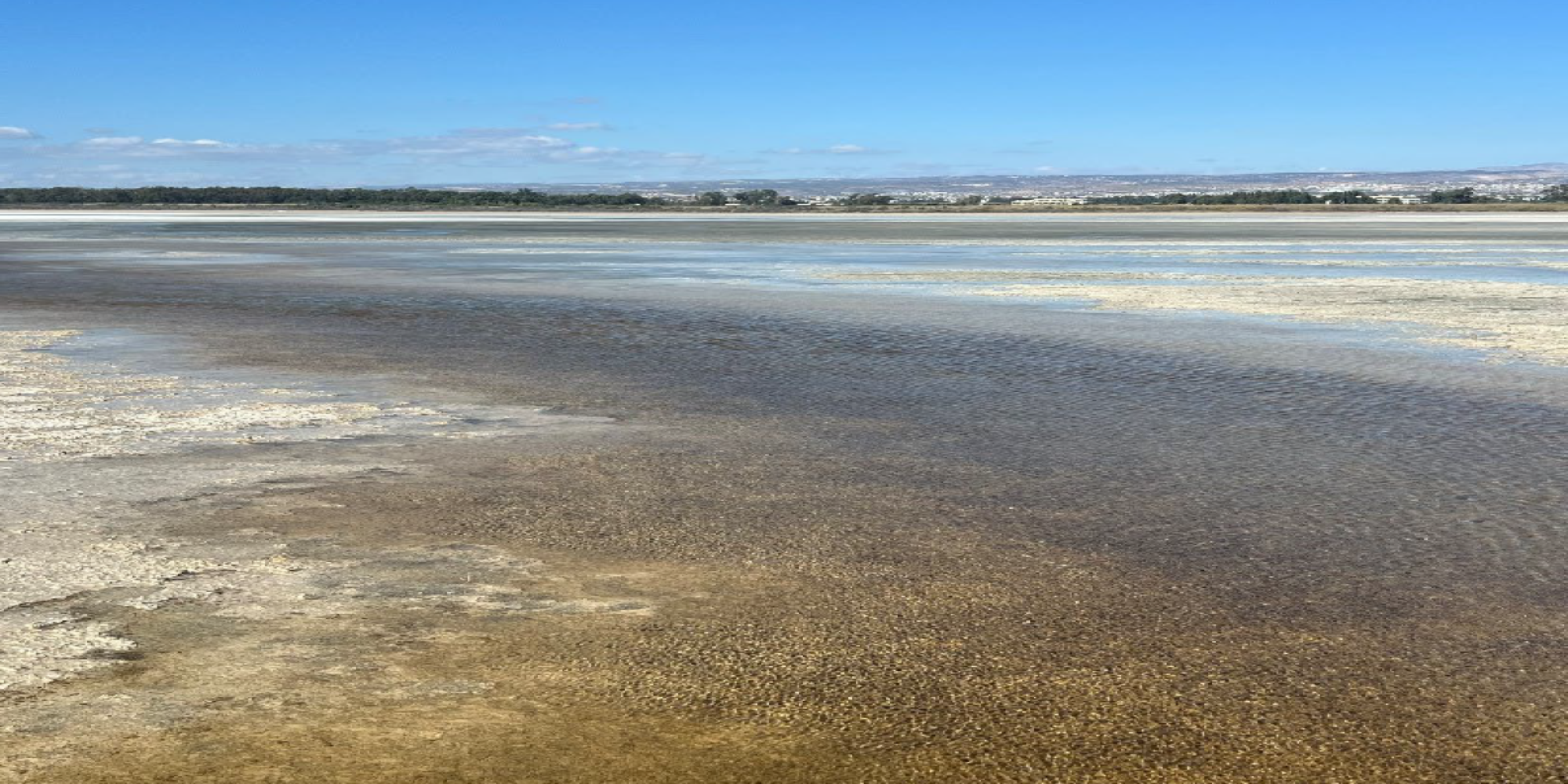
Despite the strict protection status of Akrotiri Salt Lake, BirdLife Cyprus’ recent site visits on 7, 11 and 24 November 2025 revealed extensive amounts of water during a period of complete drought, stagnant water with strong odour, and full stormwater drains despite no rainfall. In various locations, water discharges from construction sites and developments were recorded, seriously disrupting the hydrological regime of the wetlands and their natural processes.
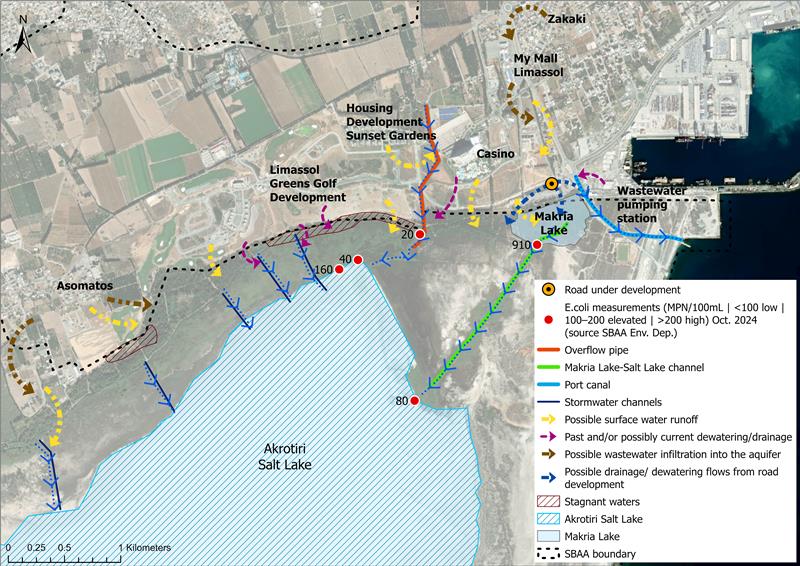
The situation is further exacerbated by water quality measurements showing elevated concentrations of the bacterium E. coli in certain sampling points taken by the British Bases. The intense odour and the presence of stagnant water of questionable quality raise legitimate concerns about possible inflows of polluted water. This issue concerns not only the ecosystems, but also public health.
The dramatic decline of flamingo populations to historically low levels is a clear indication of the degradation of water quality in the Salt Lake. In January 2025, only about 30 flamingos were recorded at Akrotiri Salt Lake, the lowest number since systematic monitoring began in 1992, whereas the annual average is around 3,800 flamingos.
BirdLife Cyprus has already sent two official letters, on 4 April and 1 December 2025, to the Minister of Agriculture, Rural Development and Environment, Dr. Maria Panayiotou, and the Minister of Interior, Mr. Konstantinos Ioannou, requesting clarifications and information. At the same time, it filed a complaint with the Department of Environment regarding an incident involving the discharge of water from a construction site. However, no clear answers have been provided on critical issues, nor have any substantial measures been taken to prevent further inflow of pollution into the wetlands.
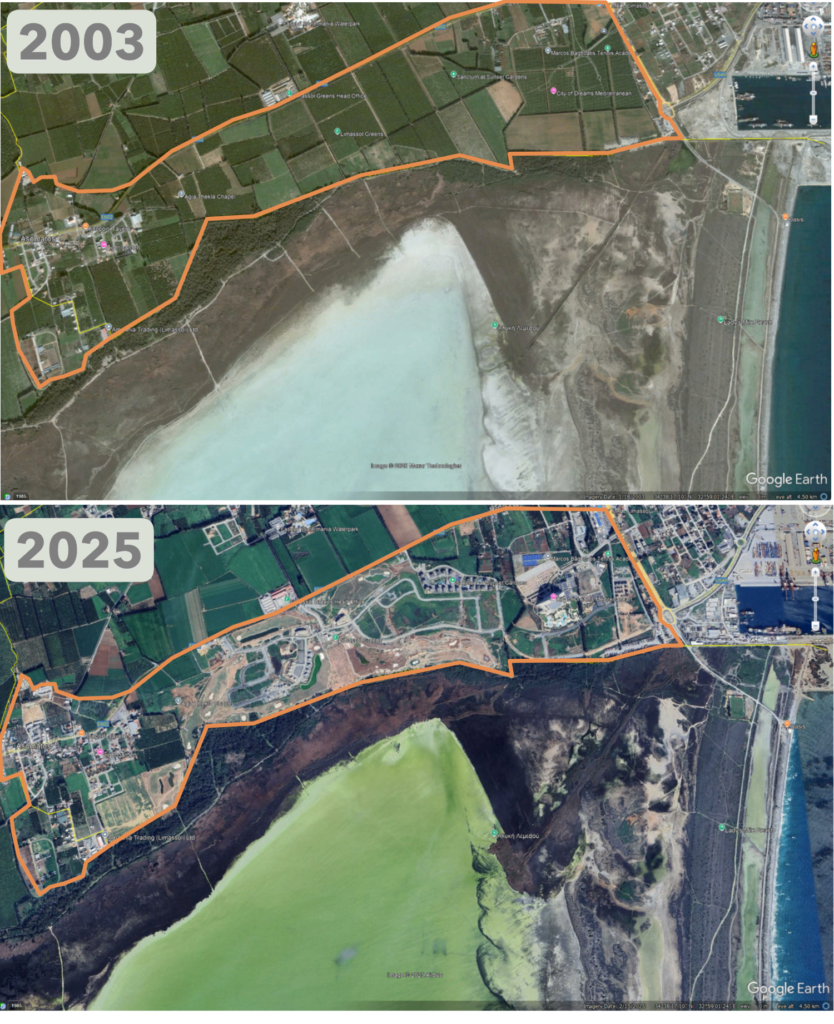
The organisation’s latest letter to the competent Ministers highlights that the extensive tourist, residential and commercial developments of recent years, resulting in significant soil sealing and increased drainage needs, appear to have altered the hydrological balance of the catchment area and, consequently, of the Salt Lake. Uncontrolled water discharges from construction sites into stormwater systems must be investigated immediately.
BirdLife Cyprus calls on the State to publicly answer:
- What is the source of the abnormal water inflows recorded in the Salt Lake and Makria Lake?
- What pumping, drainage, and water discharge permits have been issued, and to whom?
- Have construction sites or developments been approved to connect to the stormwater drainage network
- To what extent are the legally binding environmental terms of completed or ongoing projects being upheld?
Beyond investigation, targeted restoration measures are required to recover the natural hydrology and water quality of the Salt Lake, in line with the obligations of the Republic of Cyprus under the Water Framework Directive. Without such measures, the situation will continue to deteriorate, with unpredictable consequences for this sensitive ecosystem.
“Akrotiri Salt Lake shows clear signs of severe environmental degradation that can no longer be ignored. Water entering without rainfall, the strong odour, and the decline in flamingo numbers are clear signs that the ecosystem is in crisis,” said Melpo Apostolidou, Director of BirdLife Cyprus. “Authorities have a responsibility to provide immediate answers and solutions and to ensure that all developments comply with their environmental permit conditions. We need full investigation, transparency, publication of all data, and immediate restoration measures.”
BirdLife Cyprus also calls on the competent Ministers to ensure the participation of environmental organisations in the newly established technical committee for Akrotiri Salt Lake so that decision-making is based on transparency, scientific evidence, and the involvement of all stakeholders.

 English
  Greek
Greek