
Cyprus was once home to two vulture species, the Cinereous Vulture Aegypius monachus, often characterised by locals as a more dominant and powerful vulture due to its larger size, and the Griffon Vulture Gyps fulvus, a highly social species that numbered in hundreds of individuals and for which descriptions on the island even likened their gatherings in fields to flocks of sheep. Griffon Vultures were known to inhabit over 15 colonies across Cyprus from Pentadaktylos to Akamas Peninsula, mainly feeding on carcasses of livestock and donkeys.
Heavy use of poison baits is suspected to have begun in the 1940s aimed to control fox populations. Along with changes in livestock keeping practices leaving fewer available carcasses, vultures were also heavily impacted by poison use and by 1960, the small Cinereous Vulture population of Cyprus went extinct, followed by dramatic population decreases of the Griffon Vulture population. By the early 2000s, just over 10 Griffon Vulture individuals remained, and the species was critically threatened with local extinction.

Why restocking became essential
The dwindling population of Griffon Vultures in Cyprus necessitated the transport of individuals from abroad to reinforce the local population and prevent its extinction.
Restocking is a common practice throughout the world and is often necessary in the conservation of vulnerable populations. In the case of the Griffon Vulture in Cyprus, maintaining the population also conserves the species social ‘knowledge’ of appropriate feeding, roosting and nesting areas, something which becomes challenging to build once the species is extinct. Therefore, transporting individuals from areas of abundance to areas of vulnerability is a critical tool in conservation.
The first population reinforcement effort was carried out within the framework of the ‘GYPAS’ INTERREG Greece-Cyprus Programme, where 22 vultures from Crete were released in Cyprus in 2014, boosting the population to around 30 individuals. However, two mass poisoning incidents in 2015 and 2022 undermined those efforts and left the population with no successful breeding pairs and just 8 – 10 birds.
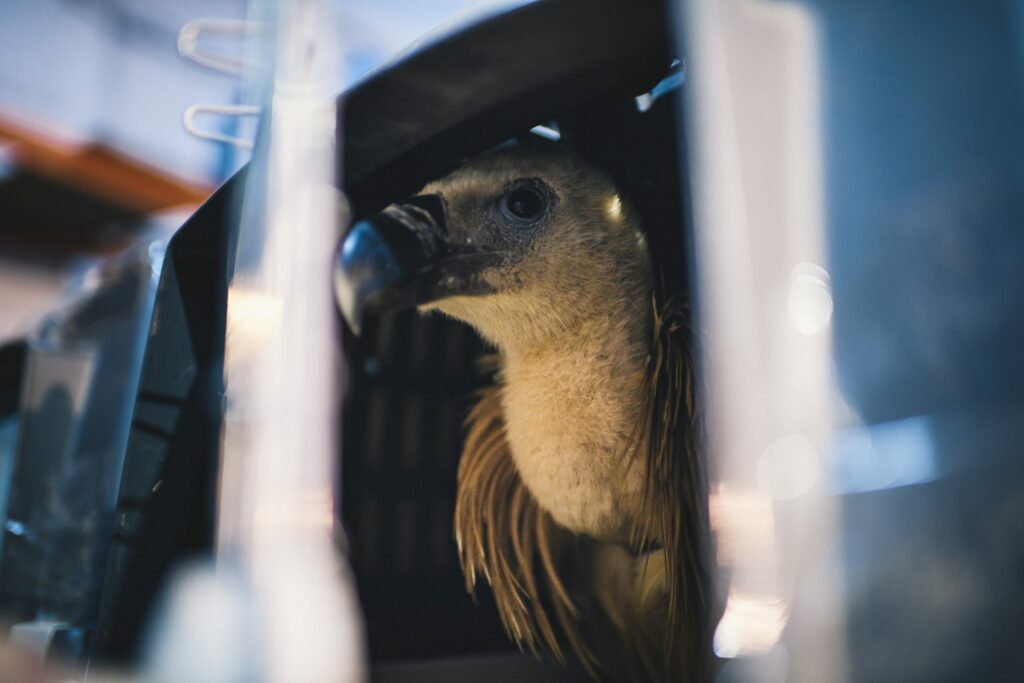
In 2019, partners of the LIFE with Vultures project, BirdLife Cyprus, the Game and Fauna Service, Terra Cypria and the Vulture Conservation Foundation, began intensive conservation efforts to address the main threats to the species and prevent its extinction. Part of the project’s efforts included the reinforcement of the population with three transports of Griffon Vultures from Spain to Cyprus, while using other funds, a fourth transport was completed to further support these efforts. Spain hosts the largest breeding population of Griffon Vultures in the world, with over 30,000 breeding pairs, making it an ideal supplier of vultures for restocking efforts. As a result, 58 Griffon Vultures were transported to Cyprus from Spain in groups of 14 – 15 individuals on an annual basis between 2022 and 2025.



Acclimatisation and preparation for release
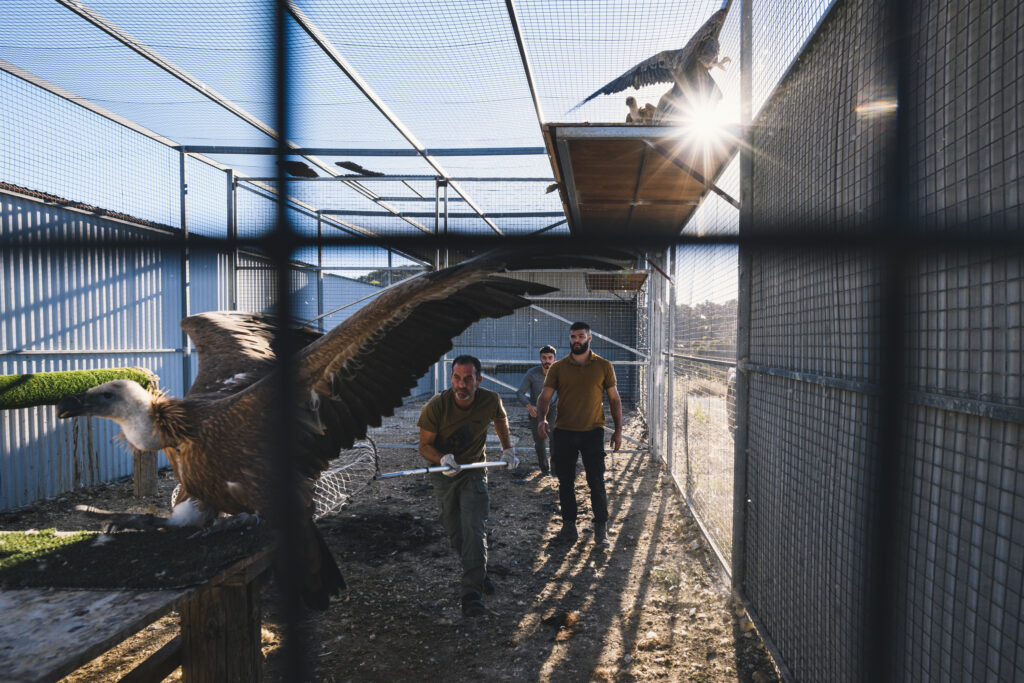
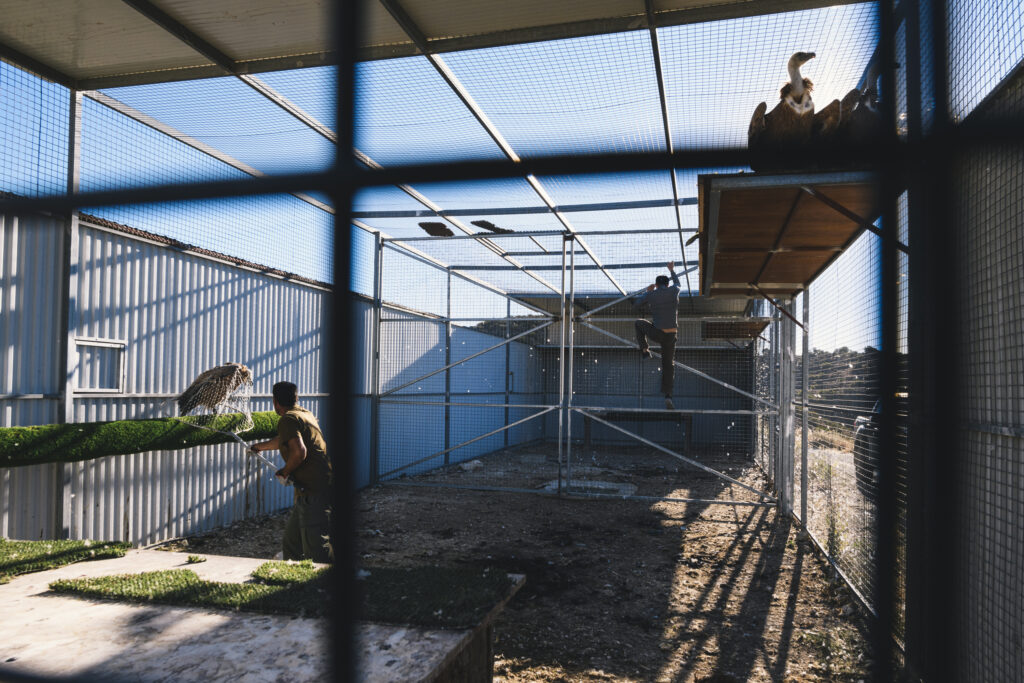
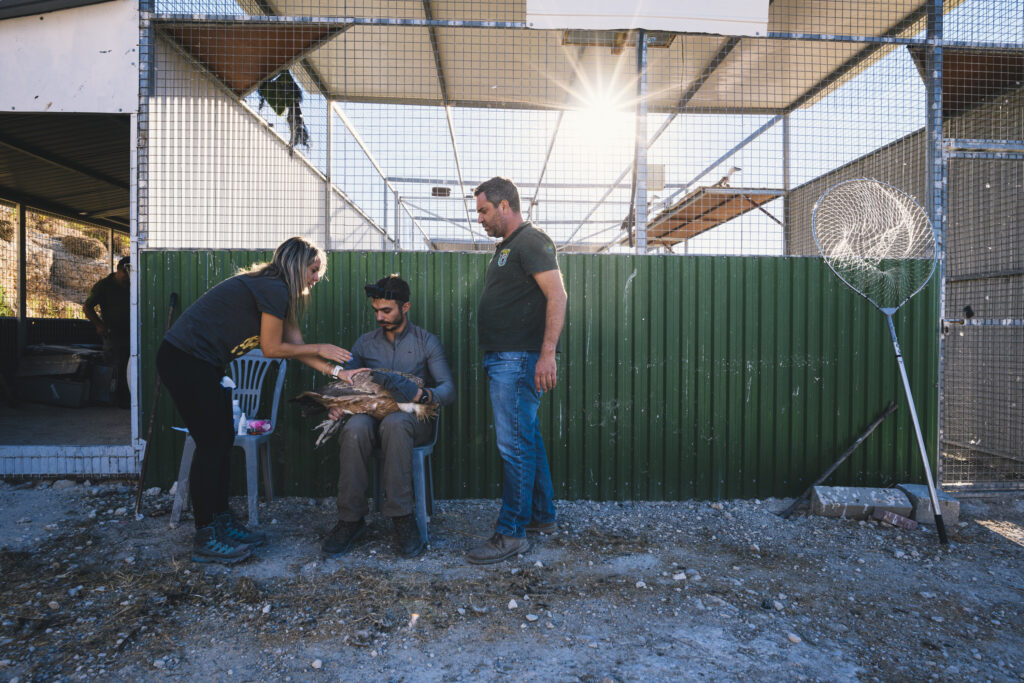
Once they arrived in Cyprus, the vultures were transported to an acclimatisation aviary in rural Limassol, built especially for hosting Griffon Vultures. Once at the aviary, the birds were checked by a veterinarian and fitted with rings for individual recognition. The vultures were then left in the aviary for a minimum of six months for acclimatisation, allowing them to orient themselves, socialise with the visiting free-flying population and mature, allowing for a smooth release with minimised mortalities. Vultures in the aviary were closely monitored from a camera and minimum human contact was maintained, except for short visits 2-3 times per week for food provision and sanitation.
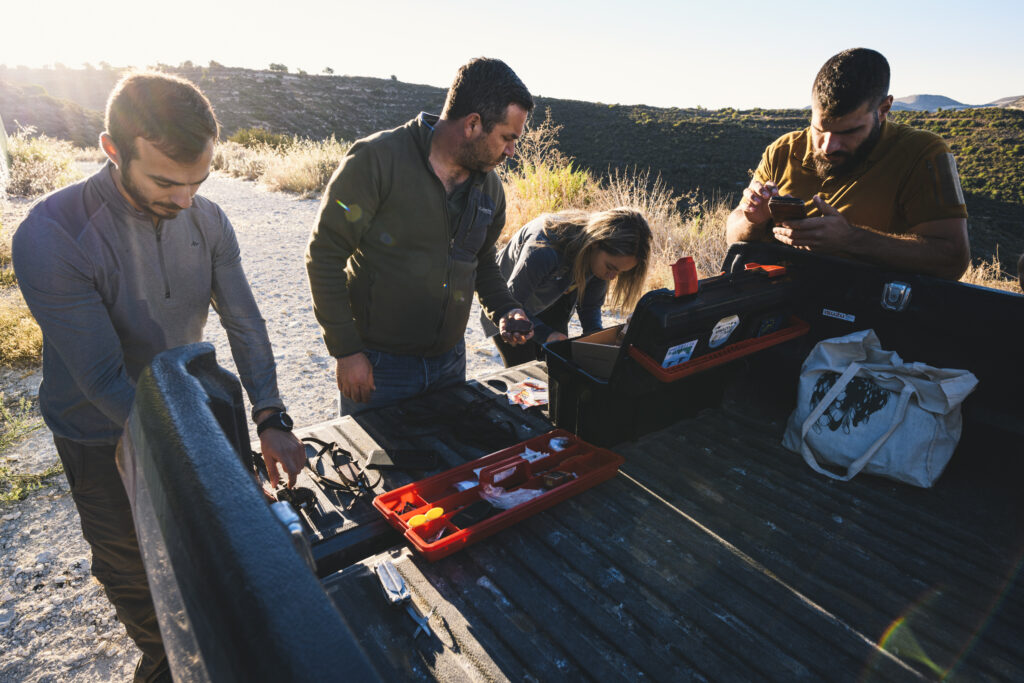
For better monitoring, all individuals were fitted with a GPS tracking device one day before their release. This device, weighing just 50g, is powered by a solar panel and allows us to closely monitor the movements and behaviour of each bird. This way we can collect detailed data such as visits to feeding stations, use of cliffs and roosting sites, mortality cases and breeding behaviour and therefore to respond to cases where vultures are in distress and need rescue and rehabilitation.
On the day of the release, the Game and Fauna Service who manages the Griffon Vulture aviary opens the aviary gate and departs from the area, allowing the vultures to exit calmly in their own time. This method of release called soft-release has been proven to drastically decrease mortalities and to foster smoother integration in the established population. Once out of the aviary, the Griffon Vultures tend to remain within a few hundred meters of the site for a few days. For some birds it may take up to 2 weeks to join the free-flying population, while for others it can be a matter of a couple of days. Once integrated into the wild population, they begin following the movements of the other birds, traveling, roosting and feeding together as a group.
How the population is doing today
Overall, 65% (38 out of 58) of the released Griffon Vultures are still alive today and form part of the current population, reflecting a generally expected outcome for restocking efforts aimed at strengthening the species. Among the recorded losses, human-related factors were notable: electrocutions on the energy distribution network accounted for 9 cases, while 3 additional cases involved one collision with overhead powerlines and two poisonings. Natural factors, such as dehydration or undetermined causes, accounted for another 8 cases. Including the four vultures that persist from the previously existing local population, the current Griffon Vulture population in Cyprus stands at around 41-44 individuals.
Positive signs: Integration and first nesting attempts
Despite the losses, restocking efforts have been very successful as the Spanish birds integrated well with the established population, using all active cliff roosting sites and feeding at designated feeding stations which ensure that adequate and safe food supply is provided for the species’ survival and growth.
The individuals released in Cyprus are still considered sub-adults since all are under five years old and sexual maturity of the species is reached at five to six years of age, meaning that breeding is expected to begin in 2026. However, a significant sign of the successful restocking efforts was the nesting of a pair of released vultures in spring 2025. The pair with names Poco and Minimoni nested on a cliff at the edge of Paphos Forest and laid an egg, incubating it for several weeks. Likely due to their immature age and inexperience, the egg did not hatch, however, it shows promising signs of future breeding – a ray of hope after 4 years of no successful breeding.
The efforts to reinforce the Griffon Vulture population in Cyprus have been successful in halting the imminent extinction of the species, preserving their social behaviours and providing hope for their survival in a more certain and sustainable future. Conservationists continue daily monitoring of all individuals and awaits with excitement the arrival of the first Griffon Vulture chick from a Spanish pair.
Preventing the extinction of Griffon Vultures in Cyprus safeguards the health of entire ecosystems, as these birds play a vital role in cleaning the environment by safely disposing of carcasses.
The project team remains firmly committed to this conservation effort, prioritising the minimisation of losses by addressing threats proactively, and strengthening collaboration, recognising that sustained cooperation with all stakeholders is essential for securing the future of Griffon Vultures in Cyprus.
The restocking effort was made possible thanks to EU funding through the LIFE programme as well as funding from the Cyprus Environment Foundation.

 English
  Greek
Greek