For a young Griffon Vulture, leaving the nest marks the beginning of one of the most critical periods of its life. In the Limnatis Valley, the first journeys of another chick will be closely monitored thanks to a GPS transmitter that was successfully fitted.
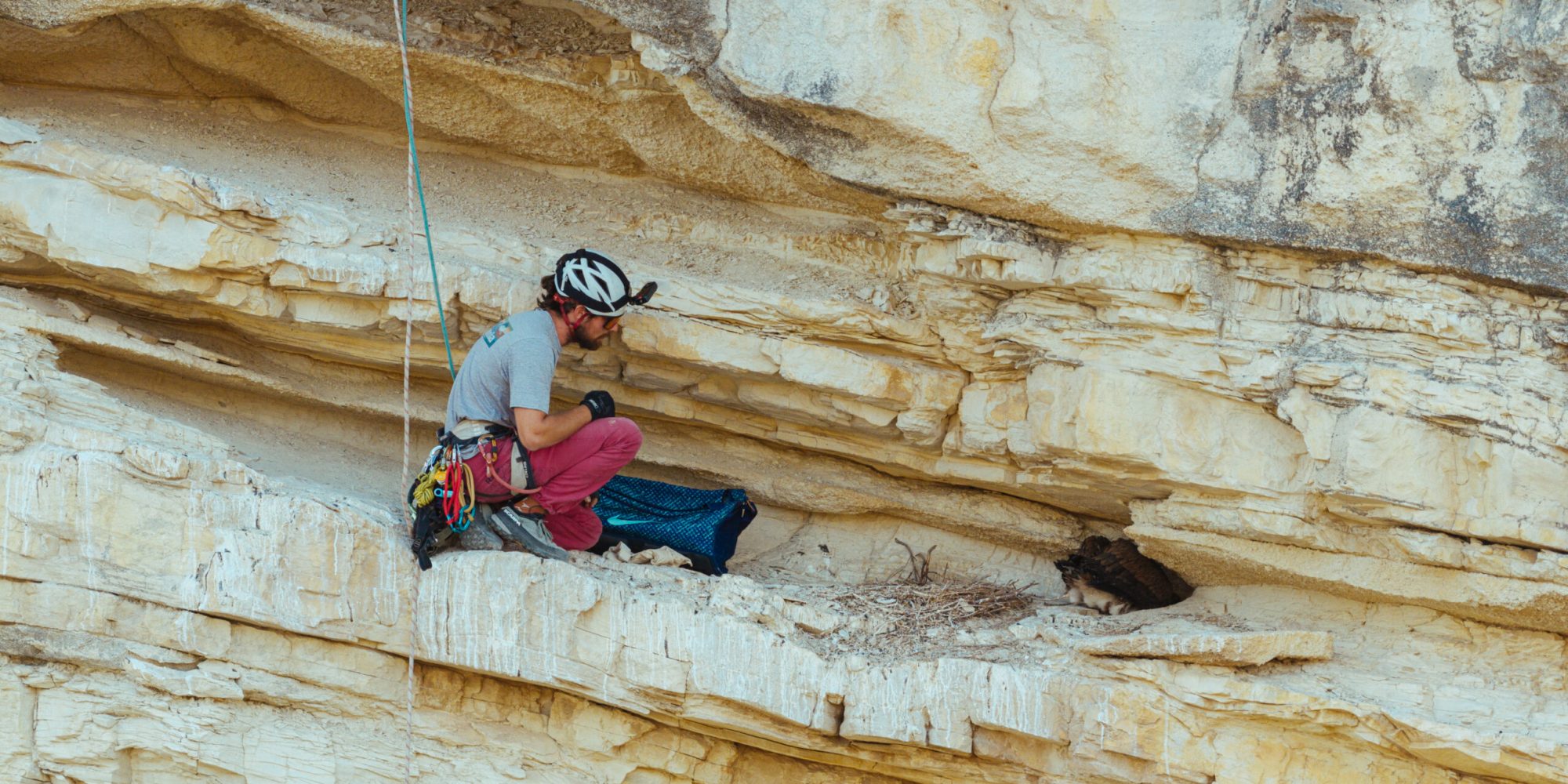
The chick, the second to be tagged this year, hatched around mid-May in the Limnatis Valley Special Protection Area. As its nest is situated on a steep cliff, the operation was particularly demanding.
Its successful completion was made possible thanks to the invaluable assistance of a professional climber. Their experience and expertise enabled the team to reach the nest safely and return the chick after the GPS transmitter had been fitted by the Game and Fauna Service, in cooperation with BirdLife Cyprus.
Both of the chick’s parents are Griffon Vultures that were brought to Cyprus from Spain as part of efforts to reinforce the island’s extremely small population of the species.
Its first journeys under close watch
Once the young vulture leaves the nest, the GPS transmitter will allow the team to monitor its movements. The data collected will provide valuable information about the areas it visits and how it adapts to life away from the nest.
Closely monitoring its behaviour will also allow the team to intervene quickly if the young vulture encounters danger or needs assistance.
The first two to three months after leaving the nest are particularly critical. During this period, the young vulture learns to find food, recognise threats and gradually integrate into the wider population.
The operation was supported by the Embassy of Spain in Cyprus, reaffirming its continued commitment to Griffon Vulture conservation on the island.
Three chicks in a significant year
This year brings cautious optimism for the future of the species. For the first time since 2021, three pairs of Griffon Vultures have bred successfully in Cyprus, with three chicks hatching in total.
For safety reasons, it will not be possible to tag the third chick, as accessing its nest could put a chick in a neighbouring nest at risk.
The recovery of a population requires time, persistence and consistent protection. This year’s results, however, demonstrate that these efforts can deliver meaningful results.
Returning to the Limnatis Valley after 16 years
The successful breeding in the Limnatis Valley is particularly significant. The last recorded breeding of Griffon Vultures in the protected area took place in 2010, 16 years ago.
Although the vultures continued to use the valley as a roosting site, no breeding had been recorded there for more than a decade.
This year’s success demonstrates that historically important nesting areas remain highly valuable for the species, even after many years without breeding activity.
Protecting and preserving such areas is therefore essential to the long-term recovery of Cyprus’ Griffon Vulture population.
For now, the chick remains in its nest, cared for by its parents and under the watchful eye of the field team. When the time comes for it to spread its wings, its first journey will not go unnoticed.

 English
  Greek
Greek 


